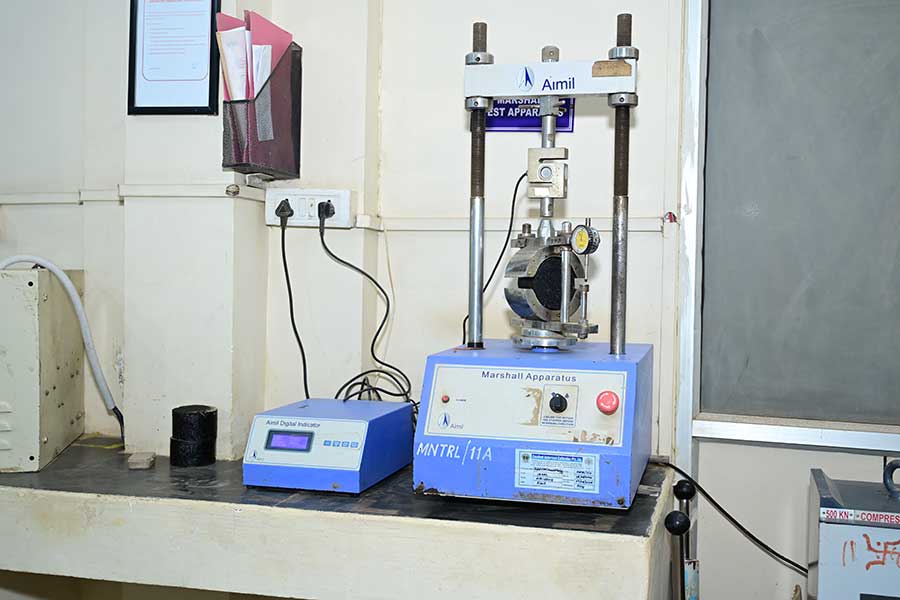
MNTRl Consultancy delivers professional, reliable, and precise coarse aggregate testing services to ensure the highest quality standards for construction projects. Our expert team utilizes advanced methodologies and state-of-the-art equipment to conduct comprehensive assessments, including gradation analysis for optimal particle distribution, Los Angeles Abrasion Value testing for wear resistance, Bulk Density measurements for mix design accuracy, and Aggregate Crushing Value evaluations for load-bearing capacity. We meticulously analyze particle shape through Elongation and Flakiness Indices, assess toughness via Impact Value testing, screen for Organic Impurities to prevent curing delays, and perform Soundness Testing to guarantee durability against environmental stressors. Committed to excellence, MNTRl Consultancy adheres to global standards (ASTM, IS, BS) while providing timely, client-focused reports, empowering engineers and contractors to make informed decisions for resilient, sustainable infrastructure. Trust us to transform raw materials into reliable foundations—precision is our promise.

Coarse aggregates, such as crushed stone, gravel, or recycled concrete, are fundamental components in construction, providing structural integrity to concrete, asphalt, and road bases. Rigorous testing ensures these materials meet performance standards. Below is an overview of key tests and their significance:
Purpose: Determines the distribution of particle sizes to optimize packing density and workability.
Method: Sieve analysis using standardized sieves (e.g., ASTM C136). Aggregates are passed through sieves of varying sizes (e.g., 4.75 mm to 75 mm).
Significance: Proper gradation minimizes voids, enhancing concrete strength and reducing cement demand. Poor gradation can lead to segregation or excessive permeability.
Purpose: Evaluates resistance to wear and degradation, critical for pavements.
Method: Aggregates and steel balls are tumbled in a rotating drum (ASTM C131/C535). The percentage loss by weight indicates abrasion value.
Significance: Lower values (<30-40%) are preferred for high-traffic surfaces, ensuring longevity under mechanical stress.
Purpose: Measures weight per unit volume (kg/m³), influencing mix design and structural load calculations.
Method: Aggregates are compacted in a calibrated container, and weight is divided by volume (ASTM C29).
Significance: Higher density aggregates improve concrete strength and reduce voids, but excessive density may increase dead loads.
Purpose: Assesses resistance to crushing under gradual compressive loads.
Method: A sample is compressed in a testing machine (IS: 2386-4), and the fines generated are measured.
Significance: Lower values (<30%) indicate stronger aggregates suitable for load-bearing structures like foundations.
Purpose: Quantify non-cubical (elongated or flat) particles that compromise workability and strength.
Method: Particles are gauged using slot sieves (elongation) or thickness gauges (flakiness) (BS 812).
Significance: Indices should ideally be <15% to prevent poor compaction and reduced interlock.
Purpose: Measures toughness against sudden loads, such as vehicular traffic.
Method: A hammer is dropped onto aggregates in a mold (IS: 2386-4), with fines percentage indicating impact value.
Significance: Values <20% are preferred for pavements, ensuring resistance to cracking.
Purpose: Detects harmful organic matter (e.g., decayed vegetation) that delays cement setting.
Method: Colorimetric analysis using sodium hydroxide (ASTM C40). A dark solution indicates impurities.
Significance: High impurity levels require washing or rejecting the aggregate to maintain curing efficiency.
Purpose: Evaluates durability against weathering (freeze-thaw, chemical exposure).
Method: Aggregates are subjected to cycles in sodium/magnesium sulfate solution (ASTM C88). Weight loss post-cycles determines soundness.
Significance: Low weight loss (<10-12%) ensures aggregates resist disintegration in harsh environments.
Coarse aggregate testing is integral to construction quality control. From gradation optimization to ensuring resistance to mechanical and environmental stresses, each test addresses specific performance criteria. Standards like ASTM, IS, and BS provide methodologies to harmonize global practices, ensuring aggregates contribute to durable, safe, and efficient structures. By adhering to these tests, engineers mitigate risks of structural failure and optimize material usage, underscoring the adage: “Quality in aggregates builds the foundation of resilience.”